As we know, every research or new project should begin with a question.
That’s something I learned from my greatest mentors.
And over time, I realized the same rule applies to almost everything in life — especially in research and education.
When I decide to teach a topic, prepare a lecture, create content for my website, or simply write a post about a complex article, I first ask myself if the message answers the question I want to address.
Because without a question, there’s no direction, and
Without direction, we are lost.
But what happens when you sit down at your computer and can’t find the question?
What happens when you reach a mental crossroads?
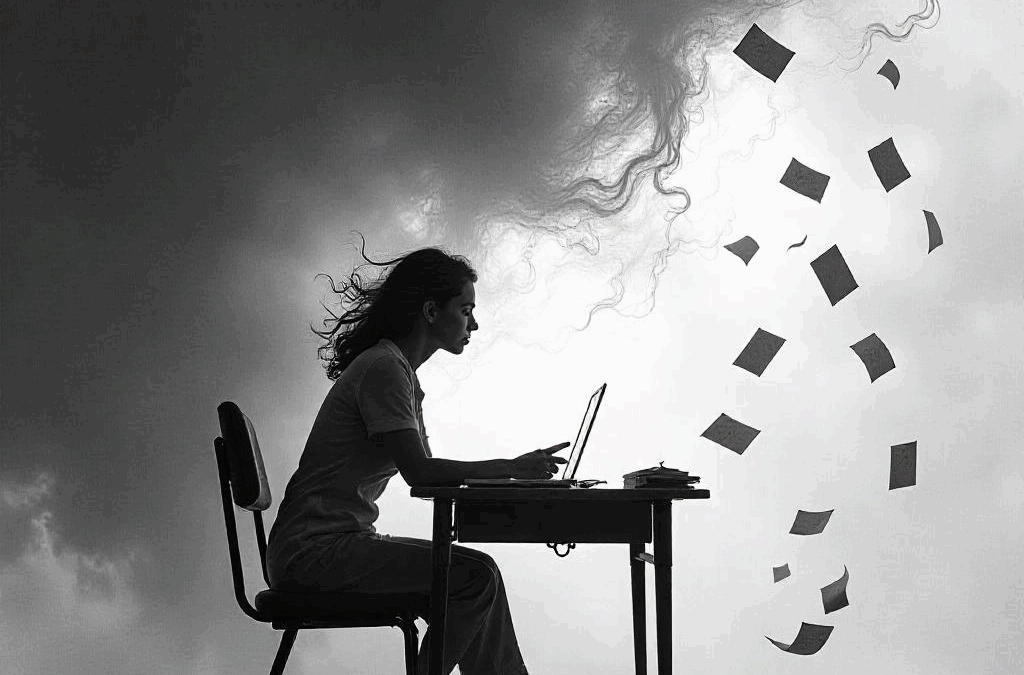
Imagine you wake up early in the morning with a long to-do list: prepare a class, study for an exam, update your website. But as soon as you sit in front of the screen, your mind goes blank.
At least not the kind of ideas I usually like: original, creative, and useful ideas that leave a mark and make people remember you because of them.
So why did this happen?
Is it just fatigue?
Are we overwhelmed?
I realized that when I feel lost and out of ideas, it’s usually because I’m dwelling on everything I’ve had to endure.
Each time I pause to reflect on my journey, I understand that my exhaustion doesn’t stem from today’s tasks; it stems from everything I’ve survived thus far.
All of that, along with being in spaces where what you do and what gets noticed don’t always match — starts to wear you down.
So when a day like this comes — a full schedule but no ideas — it’s not just exhaustion.
It’s a signal.
An uncomfortable pause that also invites something deeper.
What can we do when we reach that mental crossroads, unsure of what our purpose is?
Sometimes, the only thing we can do is stop.
Stop pushing.
And listen to the silence with the same care we usually give our ideas.
In the constant noise of producing, teaching, proving, and moving forward, we also need space to simply exist.
Maybe we won’t find the answer today.
But admitting that we don’t have it — that’s already an act of honesty.
In that moment, a new question may slowly begin to form.
And with it, a purpose that feels more real, more personal.
It may not always be brilliant or visible, but it will be true to what you believe in.
Remember:
It doesn’t matter how visible you are.
Or how many people recognize your work.
What truly remains over time is having stayed true to your values — without causing harm, without playing a double game.
Do good, without needing to be seen.
Do it with respect and humility, and most importantly, without stepping on anyone along the way.
Because, at the end of the day, quiet integrity is the only thing that truly lasts.
Happy summer to all!
— Carolina Frederico